Programme
EMA PROGRAMME
What is awaiting you?
EMA is a fast-paced and packed 1-year programme consisting of three components:
- First semester (September–January): Coursework at the Global Campus of Human Rights headquarters in Venice, accounting for 50% of the total mark (30 ECTS credits)
- Second semester (February–July): At least two courses hosted by one of 43 partner universities across Europe, representing 15% of the total mark (9 ECTS credits)
- Research thesis: Preparation of a thesis under the supervision of a faculty member from the second-semester university (submission in August and graduation in September), accounting for 35% of the total mark (21 ECTS credits)
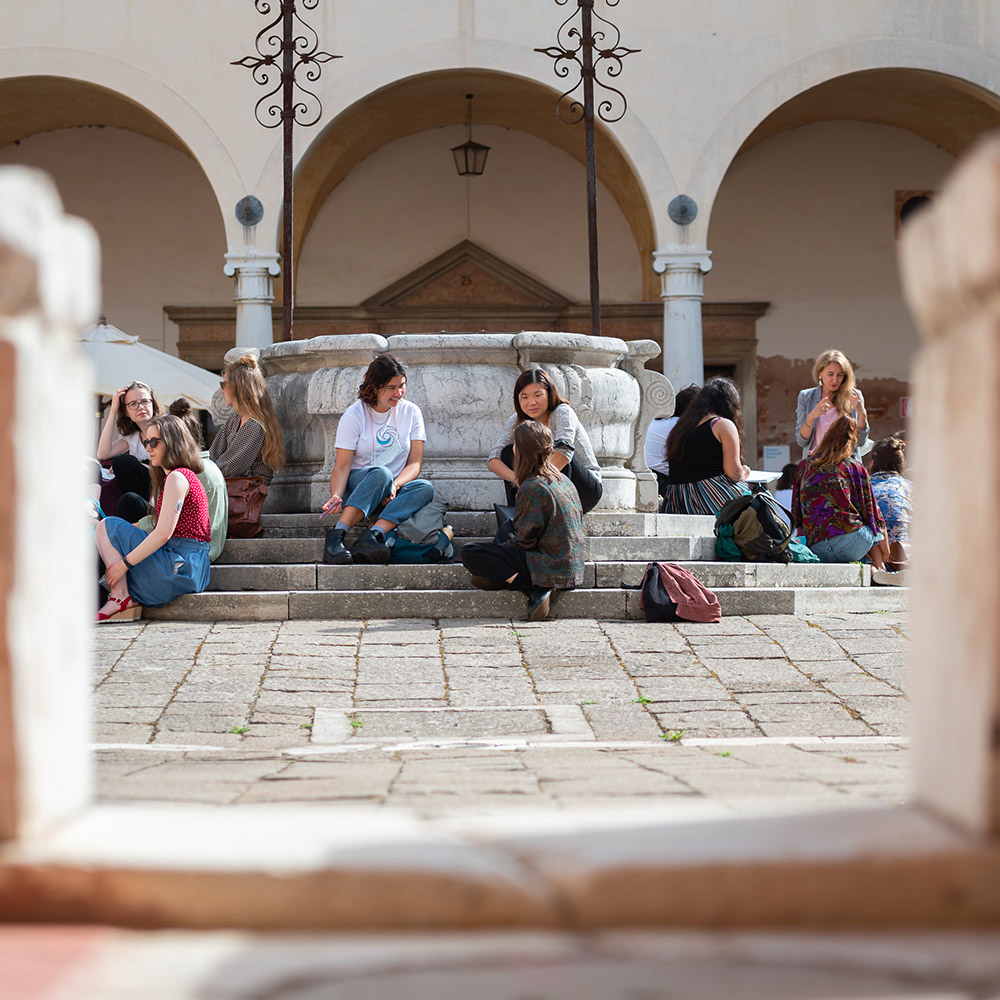
EMA programme is much more than its academic programme. Each year it brings together students from all around the world with different academic backgrounds and professional experiences who together create a special community and form enduring bonds of friendship. This diversity is further strengthened by a teaching faculty of approximately 70 professors and experts from our partner universities and key intergovernmental and non-governmental organisations from across Europe and the world.
STRUCTURE AND CONTENT
First Semester
The first semester curriculum aims to give students a breadth of understanding of the key issues at stake in relation to human rights and democratisation. The curriculum consists of the following components:
First Stream
The 18-week core academic programme taught in plenary each morning with visiting professors and experts and organised in Thematic Sections (TS):
- TS1: Human Rights Institutions, Mechanisms and Standards
- TS2: Globalisation, Development and Human Rights
- TS3: Human Rights in Context: Historical, Philosophical, Anthropological and Religious Perspectives
- TS4: Building and Protecting Democracy
- TS5: Human Rights, Peace and Security
Second Stream
A series of activities in the afternoons consisting of specialised units devised for smaller groups
- Cluster classes that foster advanced knowledge of state-of-the-art human rights issues. Previous cluster topics have included Bioethics and Biolaw, Children’s Rights, Gender and Human Rights, New Technologies and Human Rights, and Transitional Justice. (Cluster topics are subject to change each year.)
- Rolling seminars that examines human rights from the perspective of one of the programme’s core academic disciplines, namely International Law, Philosophy, and International Relations
- Academic and practical skills building classes intended to strengthen students’ analytical and research skills, and practical skills building workshops on topics such as project management, communicating human rights, digital verification of human rights violations, and human rights impact assessment. (Skills building classes are subject to change each year)
- ‘In Conversation with…’ is a lecture series in which our faculty reflect on their experience in practice, share how their human rights careers have developed and consider the challenges and opportunities of working in the field. Conceived as roundtable discussions it allows students to gain insight into a range of careers and further supports the theoretical and applied nature of the EMA programme.
Field Trip
A field trip to Kosovo in mid-January
A trademark of EMA since the programme’s inception, the field trip provides insights into the practical challenges faced by human rights officers in the field, and develops a deeper understanding of work in a post-conflict country. The field trip includes visits to national and international organisations and institutions, non-governmental organisations and civil society organisations in Kosovo.
First semester assessment
The first semester assessment is assessed through written and oral assignments and exams. Successful completion of the first semester is required to proceed to the second semester.
Second Semester
In the second semester, starting in February each year, students travel to one of our 43 partner universities, to enrol in modules offered by the university and prepare their research thesis under the supervision of a faculty member.
The second semester also gives students an opportunity to learn how to adapt to new situations and new people, and learn about new cultural environments: a key ‘soft’ skill for work in the fields of human rights and democratisation.
LEARNING METHODS
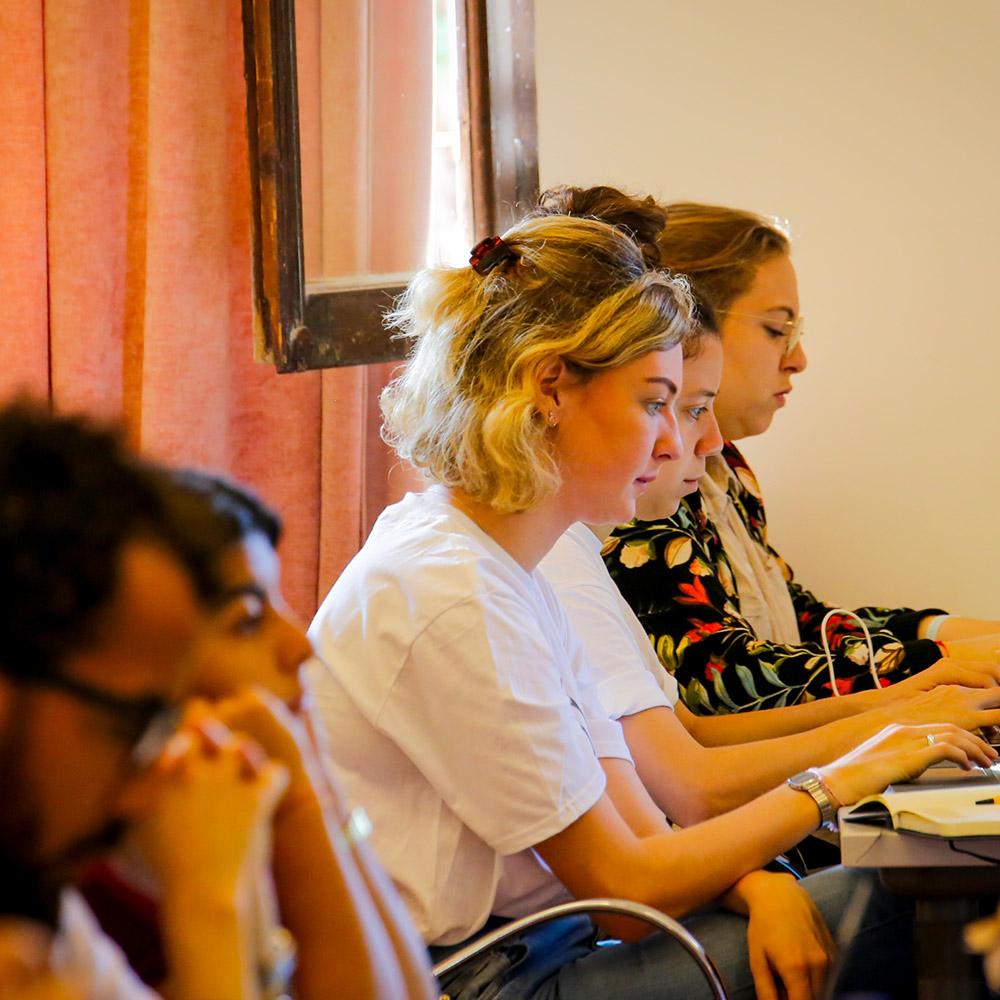
The EMA first semester combines plenary lectures, seminars, group work, and simulation exercises to foster active, practice-oriented learning.
Throughout the programme, a variety of interactive teaching methods are used ranging from traditional plenary lectures to small group seminars and scenario-based discussions which encourages active participation and reflection.
Role-play exercises are a distinctive feature of the programme and links theory to real-world challenges. These include a moot ECHR case presided over by a European Court judge, a multi-stakeholder business and human rights simulation, a moot ICC case and a peace negotiation exercise led by a professional mediator. Such activities strengthen students’ understanding of human rights law and policy while building transferable skills in critical thinking, legal reasoning, problem-solving, teamwork, and communication.
In the second semester, students consolidate these skills through the research and writing of their Master’s thesis, further deepening their substantive knowledge and analytical abilities.